
Somalia Used Truck Import Guide 2026: LHD Rules, Port Customs and the CBCA Certificate
Somalia has no nationwide age ceiling and a fragmented, port-by-port customs system: federal Mogadishu, Somaliland Berbera and Puntland Bosaso each collect their own duties. This guide covers the LHD rule, the CBCA pre-shipment certificate effective September 2026, realistic duty bands under EAC alignment and how to route and pay for a Mogadishu or Berbera clearance.
Somalia is the last large East African market without a customs union behind it: since joining the East African Community in 2024 it has been moving toward the common external tariff, but vehicle clearance today still happens port by port, under authorities that do not answer to each other. For a used truck buyer that means the rules that matter are set less in Mogadishu ministries than at the gateway your unit actually lands in. This guide is the destination view: steering and age rules, the new pre-shipment certificate, realistic duty bands, the port map, and how payments work in a dollarized, hawala-run economy. It completes our Horn of Africa set alongside our Ethiopia fuel-vehicle-ban guide and our South Sudan no-age-limit guide, and it assumes you have already priced units off our FOB benchmarks.
Steering: LHD is the compliant specification
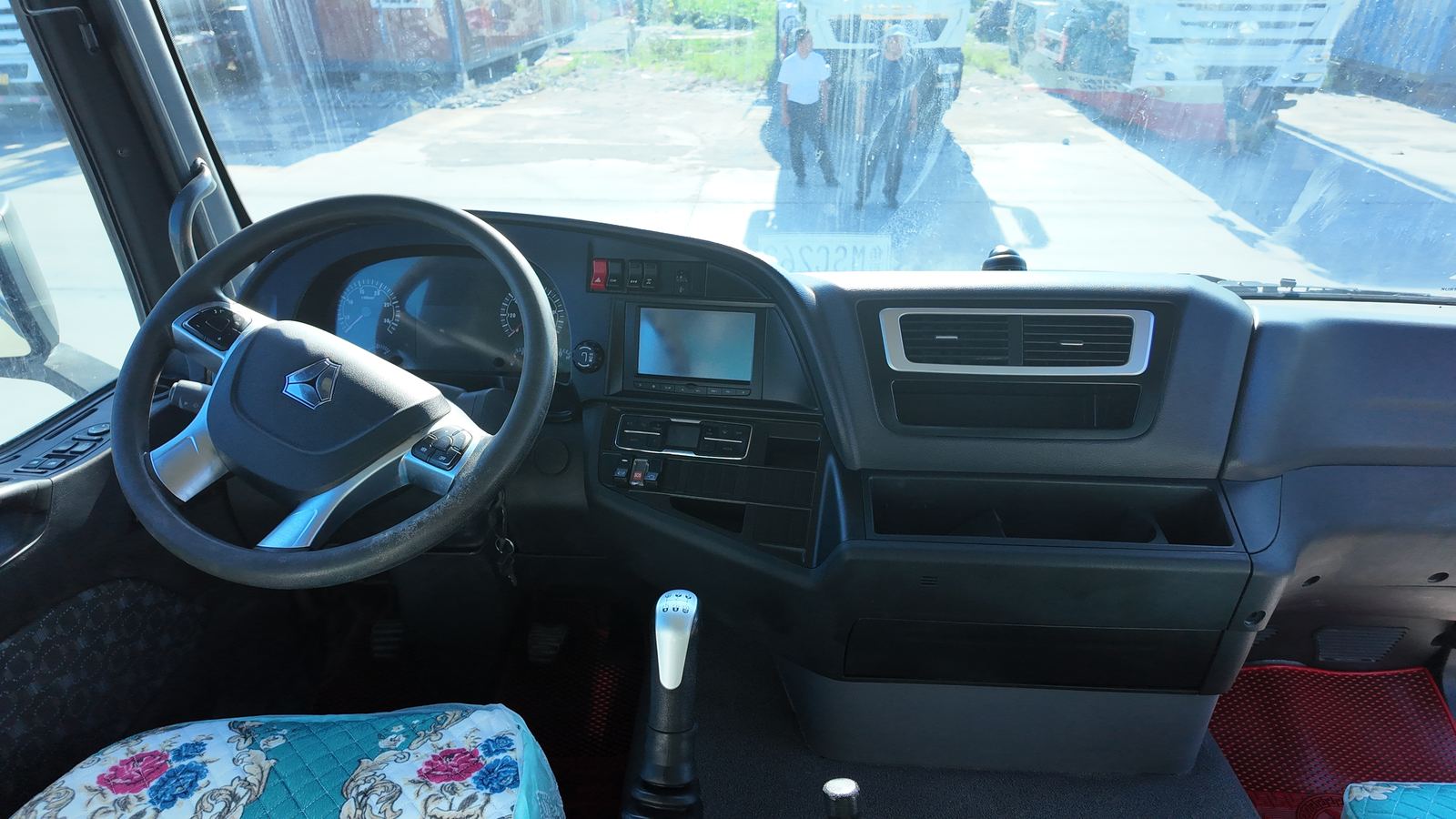
Somalia drives on the right, and the compliant specification is left-hand drive - the same baseline as Ethiopia and Djibouti next door. In practice the market is full of right-hand-drive grey imports from Japan and the UAE, and exporters disagree on how strictly that is policed; the consistent advice across sources is that LHD is what registers cleanly, while RHD units carry registration risk that varies by region (market reporting, reported). Chinese domestic stock is factory LHD, which is why a used HOWO 6x4 dump truck needs no conversion or paperwork workaround here.
Age: no national ceiling, but practice has lanes
No federal rule imposes a Kenya-style hard age ceiling (market reporting, reported). The working pattern dealers report: units five to eight years old clear smoothly and resell fastest, around ten years remains workable, and beyond twelve years customs scrutiny rises sharply and local buyers push prices down (reported). One source asserts that tanker-bodied units over eight years are barred outright (single-source, reported) - confirm per port before you book any specialized body. Put any Somalia quote against our country-by-country age limit table and you will see why it sits in the green-light column for age.
The 2026 change: CBCA certification is now live
The Somali Bureau of Standards announced a Consignment-Based Conformity Assessment (CBCA) programme in an August 24 notice, effective 1 September 2026 (reported). Consignments within the regulated scope need a Certificate of Conformity issued before shipment; arriving without it risks delay, refusal of entry or penalties (reported). Treat this like the CoC gates now appearing across the region: the certificate is cheap before loading and impossible to fix after arrival. Book the inspection when you book the vessel, not after.
Duty bands: alignment in progress, port by port
Somalia joined the EAC in 2024 and is aligning toward the common external tariff, but there is no unified national vehicle-tax stack yet (reported). What sources report today: trucks classified as capital goods are commonly quoted at about 10 percent duty, used trucks at a 25 percent band (single-source, reported); VAT runs around 10 percent (reported); a 3 percent withholding and roughly 1.5 percent port fee appear on most statements (reported); and fixed clearance charges add about 1,000 USD per unit regardless of value (reported). The critical operational fact: Mogadishu federal customs, the Somaliland administration at Berbera and Puntland at Bosaso collect separately, and effective charges are estimated to differ by port by 5-8 percent (reported). Get a written per-port breakdown from a clearing agent before you compare quotes - and note the EV incentive: battery-electric units are promoted at zero duty, zero VAT and zero registration tax (reported).
Ports and corridors: four gates, one logic
Mogadishu (Banadir), run by Albayrak, serves the south-central heartland; Berbera, upgraded by DP World, serves Hargeisa and the northwest and is also the sea gateway of the Berbera Corridor toward landlocked Ethiopia - the corridor behind the fuel-vehicle ban we covered earlier; Bosaso serves Puntland; Kismayo serves Jubaland (reported). There is no direct RoRo line from China: cargo transships via Salalah, Jebel Ali or Djibouti, roughly 30-45 days door to port (reported), with Berbera container transits quoted at 36-46 days (reported). If your routing also considers Mombasa or Dar es Salaam for the wider region, our East Africa port comparison and north-central-south corridor guide cover the trade-offs.
Payment and paperwork: a dollarized, hawala economy
Somalia is one of the most remittance-dependent economies on earth - an estimated 1.5-2 billion USD a year moves through money-transfer networks, and the vehicle trade is heavily dollarized (reported). For a Chinese supplier this means T/T in USD is normal, but escrow or a letter of credit is advisable on larger orders, and the milestone structure we recommend in our payment-safety guide matters more here than in bank-financed markets, because there is no recourse once cash leaves the hawala system. On documents, sources commonly cite the original registration and ownership certificate, purchase invoice, a valuation certificate and an Interpol police clearance certificate (reported) - assemble the pack before the vessel sails, because Somalia-bound corrections after departure are slow. Finally, buy on evidence: our pre-payment inspection checklist and warranty and after-sales demands apply doubly where port-side workshop support is thinnest - and our East Africa parts-supply guide shows why Nairobi and Dar es Salaam, not Mogadishu, are the realistic parts backstops for Somali fleets. One regional quirk to note: a state-level ban on a popular Japanese pickup series shows sub-national rules can move faster than federal ones (reported) - another reason to confirm rules for the exact destination state. Compared with the 8-year wall in our Kenya guide, Somalia is the permissive outlier in East Africa; the trade-off is a customs system you must verify per port, per shipment.