
September 2026 China Heavy Truck Exports: SINOTRUK 47.6% Share, FAW Jiefang Rising
September 2026 tracking shows China exported 41,000 heavy trucks, up 29.4 percent year on year, while domestic sales fell. SINOTRUK held a 47.6 percent export share, FAW Jiefang rose to 20.0 percent and Shacman held 15.7 percent. What the brand split means for used truck buyers.
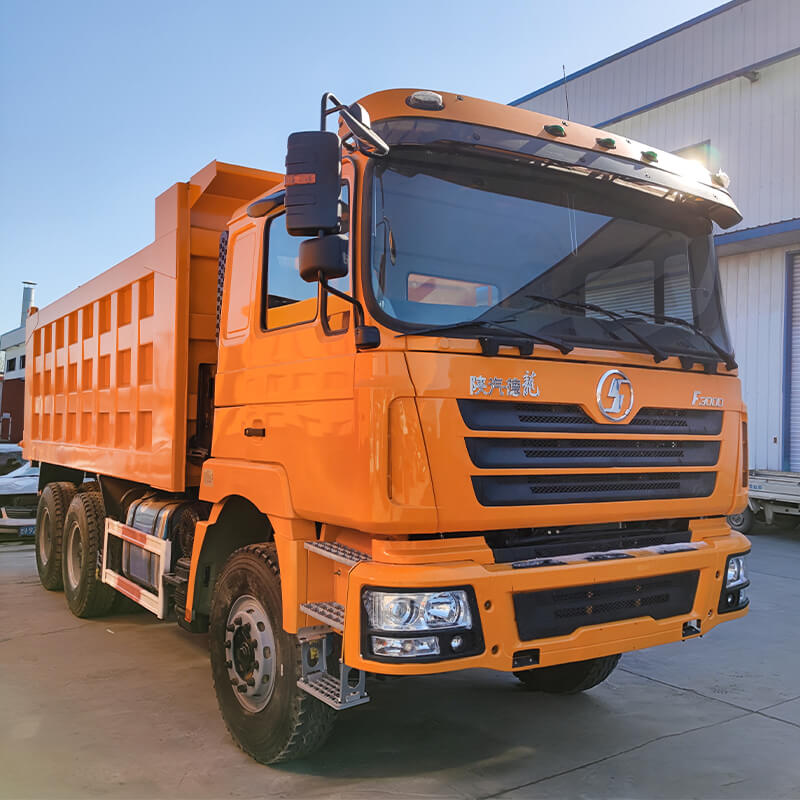
September was another month in which exports carried the Chinese heavy truck industry. While domestic wholesale fell 6.5 percent and terminal sales dropped 21.1 percent year on year, exports rose 29.4 percent to about 41,000 units, according to the Soochow Securities monthly tracking published on 25 October 2026 (CAAM and insurance-registration data). For used truck buyers in Africa, the Middle East and Latin America, the interesting part is not the headline. It is how the export pie now splits between brands, because today's export share shapes tomorrow's parts networks, used pools and resale values.
The September numbers, both calibers
Soochow's tracking puts September heavy truck exports at 41,000 units, up 29.4 percent year on year and 7.0 percent month on month, taking January-September volume to roughly 338,000 units (CAAM caliber). The customs-caliber tracking we covered in September (news 109) put that month at 47,900 units, up 42.6 percent, and the year to date at 363,500. The two series read different sources - CAAM wholesale data versus customs clearance records - so they never match exactly. Both point the same way: export volume is running at record levels, and the full-year wholesale forecast now sits around 1.253 million units, up 9.5 percent (Soochow estimate).
Domestic weakness matters for used supply too. Terminal sales fell 21.1 percent in September as the trade-in policy effect faded and the AEBS regulation switch in July pulled demand forward. Natural gas truck sales collapsed 69 percent to 7,300 units. A weak home market pushes manufacturers to defend export volume, which historically means aggressive pricing on new units and, with a lag, softer used export prices as fleets trade in.
Who owns the export market
The September brand split, as shares of China's heavy truck exports (Soochow tracking):
- SINOTRUK: 47.6 percent, up 2.6 points versus full-year 2025, down 3.7 points from August
- FAW Jiefang: 20.0 percent, up 2.3 points versus 2025 and up 3.5 points month on month - the fastest riser
- Shacman (Shaanxi Automobile): 15.7 percent, down 1.2 points versus 2025
- Foton: 6.4 percent, down 1.4 points
- Dongfeng: 6.2 percent, down 2.5 points
Three brands - SINOTRUK, FAW Jiefang and Shacman - together hold 83.3 percent of China's heavy truck exports. SINOTRUK's 47.6 percent is no one-month spike: its H1 2026 results (news 112) showed export volume up 57.1 percent and export revenue up 54 percent, with the company reporting the industry export crown for 22 consecutive years. The September data confirms the concentration is continuing, not reversing.
What a 47.6 percent share means when you buy used
Export share is the best leading indicator available for the after-sales reality you will live with. A brand with half the export channel gets container after container of parts on the same ships as the trucks, trains mechanics who know its engines by sound, and builds a used pool that makes resale pricing transparent. When nearly one in two exported Chinese heavy trucks is a Sinotruk product, every African port corridor develops HOWO-literate workshops and deep WD615 and MC-series parts shelves - news 99 maps how that plays out in West Africa.
The trade-off is price discipline. Popular units sell fast at strong prices, and a buyer who limits himself to one badge pays for that liquidity. FAW Jiefang's rise is the trend to watch: at 20.0 percent and climbing, Jiefang trucks are appearing in visible numbers in East and West African fleets, and the parts ecosystem follows volume with a lag of one to two years. Buyers who verify parts availability locally first - the same logic we applied to Cummins-powered FOTON in news 115 - can find better-spec Jiefang units priced below equivalent HOWO tractors.
The engine landscape behind the brands
Engine shares in September (terminal caliber): Xichai 15.1 percent, Sinotruk powertrain 13.8 percent (up 4.6 points versus 2025), Cummins 12.9 percent, Weichai 12.6 percent (down 6.6 points), Yuchai 8.4 percent. Weichai's terminal installations fell 48.8 percent year on year, dragged by the natural gas slump and the shift toward new-energy tractors. For a used buyer this matters in one specific way: the same HOWO badge can carry a Weichai engine on older builds or a Sinotruk MC-series engine on newer ones, exactly the split our model guide (news 114) explains. Confirm which engine family your local market stocks before you buy the truck, not after.
Where the volume is going
Soochow notes African demand kept improving through September and Southeast Asian growth is recovering. Latin America was the fastest-growing region in the customs data. For Africa specifically, the top destinations remain Tanzania, Nigeria and Kenya - markets where SINOTRUK's share of arrivals is visibly above its national average. That loop - volume builds parts networks, parts networks drive more volume - is why export share deserves a place in your brand decision.
Five actions for buyers this quarter
- Check your corridor's parts reality first: walk the market in Lagos, Mombasa, Tema or Dar es Salaam and count which brands' filters, brake drums and injectors sit on the shelf.
- Price against the five-brand FOB baseline (news 73) before negotiating. September's concentration data supports holding firm on popular HOWO configurations.
- Inspect like a professional regardless of badge: the pre-deposit checklist (news 51) and the remanufacturing grades (news 89) apply to every brand equally.
- Lock shipping early: Q4 booking windows stay tight through Chinese New Year (news 79).
- Watch the fourth quarter at home: a revived Guo IV replacement policy would release more 2019-2021 trade-in stock into the export pool through 2027 - good news for both supply and prices.
The September data describes a concentrated, export-driven market. Buy the brand your corridor can service, at a price anchored to the FOB baseline, with milestone payments and a written warranty that protect the money (news 87, news 95).