
Mauritania Mining Haulage 2026: SNIM, the Essar Rail Deal and Truck Demand
On 2 November SNIM signed a rail deal with Essar for 7.5 million tonnes a year from Askaf - the first private access to Mauritania's ore railway. The pits, satellite deposits and port economy still run on trucks.
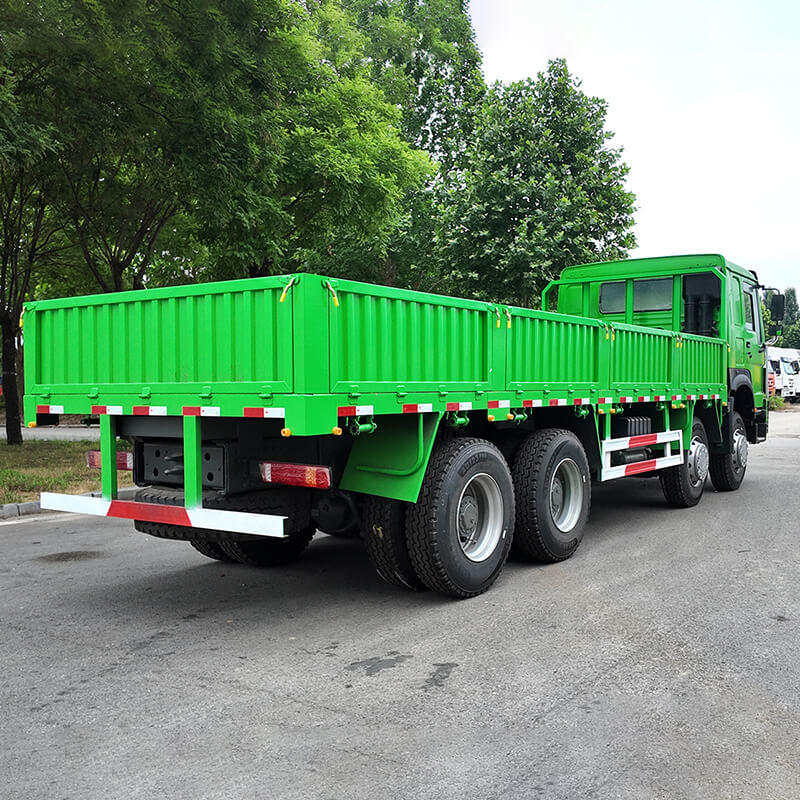
Mauritania almost never appears on African truck-market lists, which is precisely why serious buyers look at it. Iron ore is the economy - roughly 40 to 50 percent of export earnings by BBC-cited estimates - and the famous 704 km railway from Zouerat to Nouadhibou carries the export tonnage on trains up to 3 km long with more than 200 wagons. But the railway only carries what SNIM puts on it. Everything else in the mining corridor - pit waste, satellite-deposit ore, fuel, explosives, cement, camp supplies and the growing port economy - moves by road. Our Senegal-Mauritania import guide covers the rules and the Dakar gateway; this piece maps who hauls what, on the model we used for the Ghana mining demand map.
The November rail deal changes the map's edges
On 2 November 2026, SNIM and Essar signed an iron-ore rail transport agreement in Paris, witnessed by the Minister of Mines and Industry. Essar Capital Mauritius is preparing to exploit its Askaf license in the Tiris Zemmour region, with rail transport contracted for 7.5 million tonnes per year, production expected to commence within roughly six months and about 2,000 jobs during construction and installation. It is the first time private-sector actors get access to the national railway (all reported by African Digest). The context matters: SNIM's output, once around 10 million tonnes a year, is now targeted to reach 45 million tonnes, and the Nouadhibou mineral port has been dredged over a 25 km channel to take vessels up to 230,000 tonnes (African Development Bank-reported). More tonnage on the railway means more activity at every point the railway does not reach.
Four layers of road demand around the railway
The corridor's truck demand stacks in four layers. Layer one: mine contractors inside the pit areas, hauling waste rock and run-of-mine ore on short, heavily loaded cycles - classic 8x4 and 6x4 dump work. Layer two: satellite deposits beyond rail reach, where ore moves by truck to transfer points. Layer three: junior miners without rail agreements trucking cargo toward Nouadhibou on the 500-plus km desert road - the segment where tractor-trailer combinations and tipper trains earn their keep. Layer four: the support economy - fuel tankers, explosives trucks, cement and camp supplies moving north from Nouadhibou and Nouakchott, plus general cargo pulled in by the expanded deep-water port and free-zone development (corridor structure reported by trade press). Compare the specification logic with our pan-Africa mining dump truck benchmarks and the Mongolia mining corridor guide - desert mining punishes the same weaknesses as steppe mining, just with more dust.
What survives the Sahara
Fleets already working the region converge on two lessons. Cooling first: a truck rated for temperate duty will overheat on a loaded climb out of a pit at 46-degree ambient, so oversized cooling packages and verified fan-clutch behavior belong on the pre-delivery checklist - our warranty and after-sales guide lists what to demand in writing. Filtration second: fine Saharan dust passes worn seals in hours, and dual-stage air cleaners serviced on hours rather than kilometers are the difference between a long-lived engine and a dusted one. With limited dealer infrastructure outside Nouadhibou and Nouakchott, mechanical simplicity and a deep fast-moving parts stock matter more than electronics - the same logic behind the West Africa parts network guide. Mauritania is an LHD market, and the age and duty specifics live in our Senegal-Mauritania guide rather than here.
Getting equipment in
Nouadhibou is the natural entry port, with RoRo and break-bulk services from China on Mediterranean and West Africa rotations (reported). Book against the lead times in the Q4 RoRo booking window, and if the corridor serves landlocked customers beyond Mauritania, the routing logic in our north-south corridor comparison applies. Payment discipline is the usual: the T/T and L/C fraud prevention guide before any wire. For this corridor TianCheng recommends the HOWO 6x4 dump truck 400 hp for pit cycles and the SHACMAN Delong F3000 6x4 tractor for the long desert legs - send us your haul profile and we will spec the unit and quote the Nouadhibou rotation.