
Northern vs Central vs Southern Corridor: Routing Used Trucks to Landlocked Africa
Landlocked Africa moves its freight through three gateway systems: the Northern Corridor from Mombasa, the Central Corridor from Dar es Salaam and the southern gates at Durban and Beira. This guide matches each landlocked market to its natural corridor, compares age caps, duty stacks and steering rules along the way, and shows how corridor choice changes which truck you should buy.
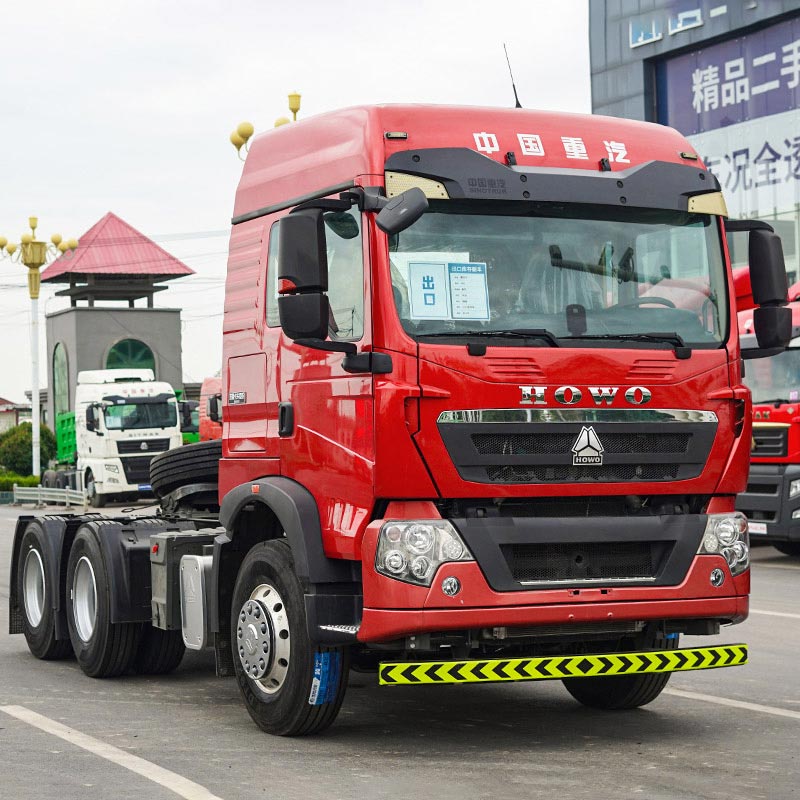
Landlocked markets buy more Chinese used trucks than most coastal economies on the continent, and every one of those trucks enters through a corridor somebody chose months before the first payment. Three gateway systems do almost all of that work: the Northern Corridor out of Mombasa, the Central Corridor out of Dar es Salaam, and the southern gates at Durban and Beira. We have already compared the two East African ports head-to-head in the Mombasa vs Dar es Salaam guide; this piece zooms out to the full map, adds the third gate, and matches each landlocked market to its natural corridor. Corridor choice decides transit weeks, duty exposure and even which side of the cab the steering wheel needs to be on, so it is worth fixing before you shortlist trucks - the LHD country map is the reference for the steering split.
Three corridors, three personalities
The Northern Corridor runs from Mombasa into Kenya, Uganda, Rwanda, South Sudan and the eastern DR Congo. Kenya anchors it: right-hand drive, an eight-year age cap and the most developed clearing ecosystem in the region, all documented in the Kenya import guide. Uganda extends the corridor inland through the border crossings covered in the Uganda guide. South Sudan is the end-of-line market with no age limit and its own border realities at Nimule, per the South Sudan guide. Rwanda is the exception that keeps buyers honest: it drives on the left-hand side of the road, so trucks headed to Kigali must be LHD even though Kenya and Uganda are RHD markets - the Rwanda guide walks through how importers handle the split.
The Central Corridor starts at Dar es Salaam and feeds Tanzania, Zambia, DR Congo, Rwanda, Burundi and Malawi. Tanzania sets the tone with no hard age limit and a large domestic fleet culture, per the Tanzania guide. For the Copperbelt, Dar is often the shorter inland leg than any southern gate, which keeps Zambia a swing market between corridors - the Zambia guide details ZRA duties and inspection. DR Congo rides this corridor deep into Katanga with a 15-year cap and OCC inspection, per the DR Congo guide. Malawi rounds it out with one of the friendliest duty regimes on the continent for heavy units - near-zero duty over 10 tonnes - per the Malawi guide.
The southern gates complete the map. Durban is the volume gateway for South Africa and an alternative for Botswana, Namibia and even Zambia when the inland leg prices right; Beira is the natural gate for Zimbabwe and central Mozambique, and the Zimbabwe guide covers the SI 59 age rule and ZIMRA duties along the Beira route. South Africa itself is largely a new-truck market for imports, which is why its neighbours source used units through the same southern ports and clear them under local rules.
Matching the market to the gate
The routing logic by destination: Kenya, Uganda and South Sudan ship through Mombasa. Tanzania, Burundi and Malawi ship through Dar es Salaam. Katanga-bound DR Congo cargo and Rwandan consignments can ride either East African gate, and the port-level comparison walks through the trade-offs. Zimbabwe and central Mozambique belong to Beira and Durban. Zambia is the swing market: Copperbelt cargo usually fits Dar better, while southern Zambian operators sometimes find Durban or Walvis Bay competitive once the full inland leg is costed. Before locking any route, check the country-by-country age limit table, because the age cap at the destination - not at the port - decides whether a unit can be registered and later resold.
What the corridor changes about the truck
Three practical consequences follow. First, the age cap at your destination governs your buy: the eight-year Kenyan cap pushes buyers toward late-model units, while no-limit and 15-year markets leave room for older, cheaper iron. Second, steering matters: the RHD belt from Kenya through Tanzania, Zambia and Zimbabwe contrasts with LHD markets such as Rwanda, Burundi, DR Congo and South Sudan, and a corridor that crosses that line changes what you can buy. Third, duty economics differ sharply by market - Malawi rewards tonnage with its near-zero heavy-truck duty, while Kenya charges for age - so the same truck can be a bargain in one corridor and a liability in another.
Fix the corridor first, then apply the standard disciplines: compare the two East African gates head-to-head, confirm the destination age cap, and clear the paperwork chain before the truck leaves port. Buyers who match market to gate routinely save weeks of transit and avoid the most expensive mistake in the trade - a truck that cannot be registered where the cargo actually goes.