Technical Whitepaper: How Liangshan Reconditions Used Chinese Heavy Trucks for Global Conditions
Introduction: The Engineering Value Behind China's Used Truck Exports
As global logistics infrastructure evolves and mining and construction demand keeps growing, overseas B2B fleet buyers have shifted focus from purchase price alone to total cost of ownership (TCO) and uptime under specific operating conditions. Chinese used heavy-duty trucks - built on mature powertrain technology, strong value and exceptional parts commonality - occupy a leading position in the global used commercial vehicle market.
Exporting a used truck, however, is far more than reselling an old vehicle. Fuel quality, road conditions, climate (heat, humidity, sand) and overloading habits differ sharply between markets. At Liangshan, Shandong - China's largest used commercial vehicle trading and reconditioning hub - a standardized remanufacturing chain rebuilds export trucks to precisely match target-market operating conditions through fine inspection, powertrain re-engineering, chassis reinforcement and emission downgrades. This whitepaper deconstructs the powertrain architecture of mainstream export trucks, reveals Liangshan reconditioning details, and provides regional selection logic.
1. Powertrain Architecture of Mainstream Export Trucks
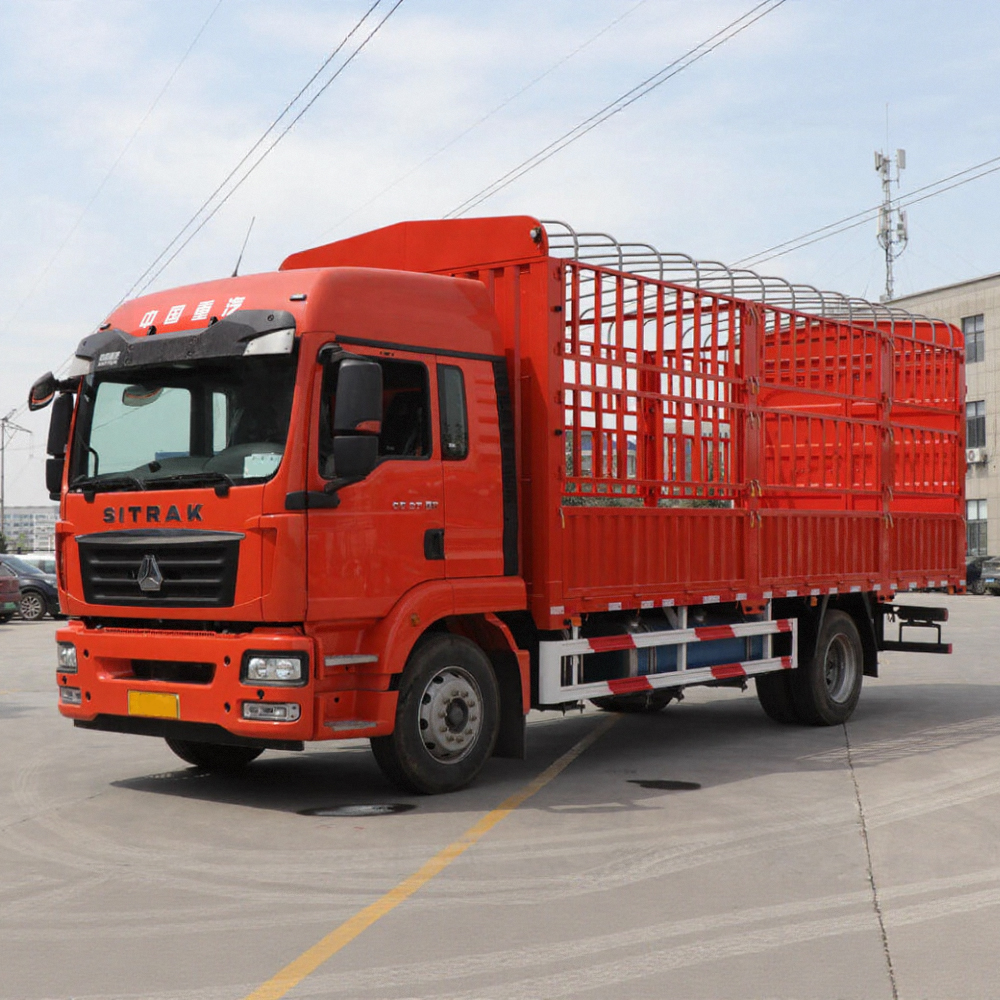
SINOTRUK (HOWO/SITRAK) and SHACMAN dominate China's heavy truck export market, each with a distinct powertrain philosophy.
1.1 Engine Matching: Weichai WP12/WP13 vs SINOTRUK MC11/MC13
Weichai WP12/WP13 (SHACMAN mainstay; also on some HOWO TX/NX): Large-displacement designs (11.6L/12.9L) with a wide low-speed high-torque band. WP12 delivers a stable 2100 Nm peak between 1000-1400 rpm; WP13 reaches 2300-2500 Nm. Wet cylinder liners and CGI cylinder heads give outstanding thermal-load and overload tolerance. High tolerance for high-sulfur diesel (>500ppm) and mechanically robust injection systems make Weichai engines the preferred choice for poor roads, heavy loads and mining.
SINOTRUK MC11/MC13 (HOWO T7H/SITRAK G5/TX mainstay): Licensed from MAN D20/D26, featuring fracture-split connecting rods and high-strength CGI crankcases. MC11 (10.5L) spans 360-440HP; MC13 (12.41L) spans 480-540HP. High specific power, 1.5-million-km B10 life, light weight and excellent fuel economy make them ideal for long-haul corridor logistics at 40-49t GCW.
1.2 Transmissions and Drive Axles: FAST vs SINOTRUK HW
FAST gearboxes (e.g. 12JSD200T-B / 12JSD220T): Twin countershaft torque-split design reduces gear tooth loading. 12-speed main-and-splitter combos deliver first-gear ratios of 12.10-15.53 for heavy-load starts and climbing. FAST's aftermarket parts coverage across Africa and Central Asia is unmatched, keeping maintenance costs low.
SINOTRUK HW gearboxes (HW19710 / HW25716XAL AMT): The HW19710 is a 10-speed helical design balancing shift smoothness and gear strength; the 16-speed HW25716 keeps engine speed in the sweet spot. Matched with HW1697/HW197 reducers, HW boxes deliver high transmission efficiency on flat, high-speed corridors.
1.3 Core Powertrain Parameters - Export Models Comparison
| Model | Engine | Transmission | Drive | GCW | Best Application |
|---|---|---|---|---|---|
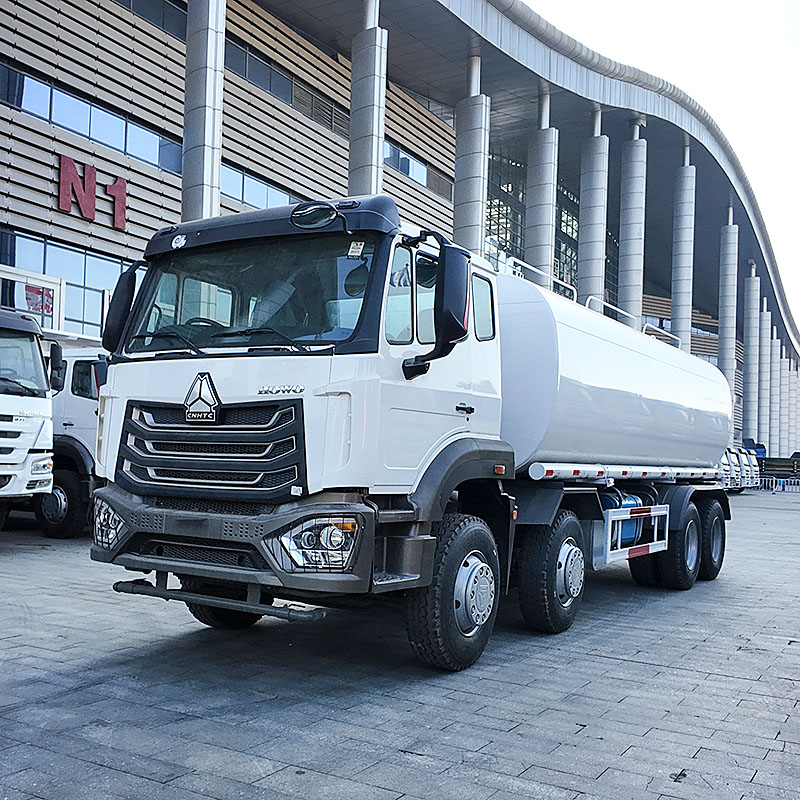
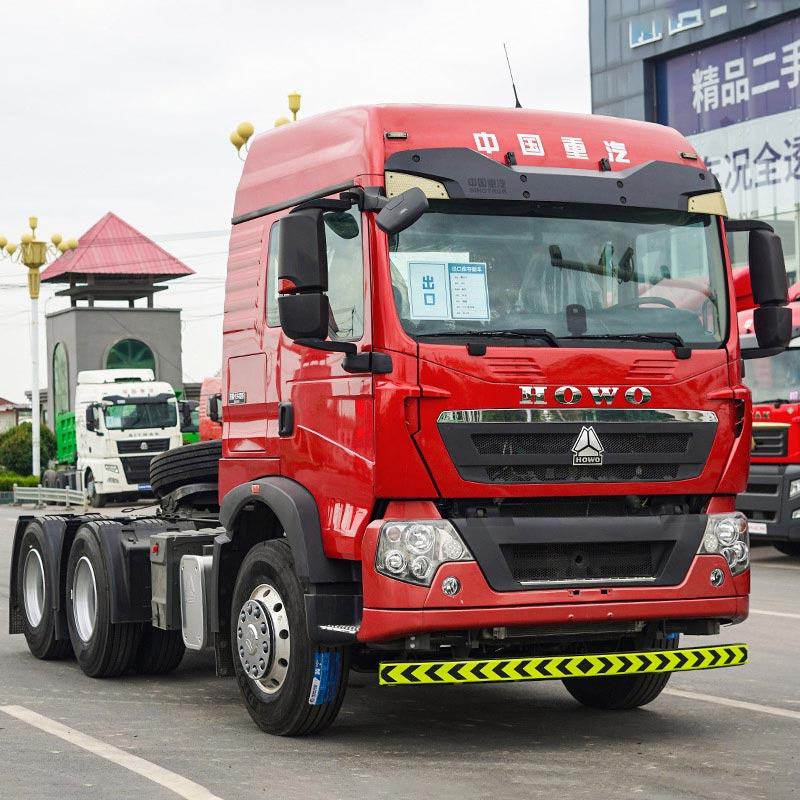
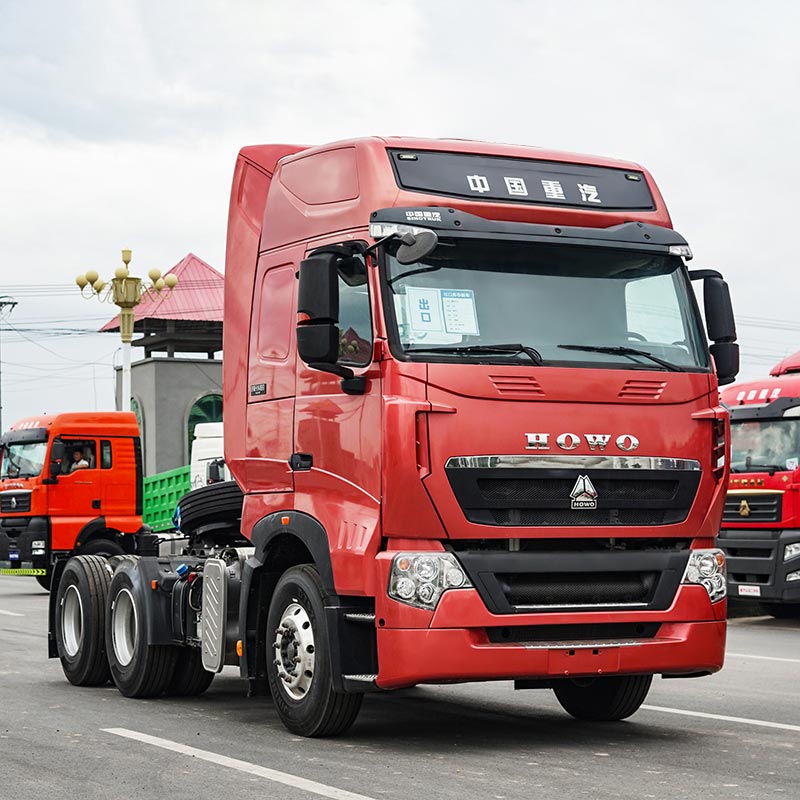
| HOWO TX 371 | WD615.47 (371HP) | HW19710 (10F+2R) | 6x4 | 40-50t | Medium-haul standard loads / containers |
| HOWO TX430 | MC11.43-30 (430HP) | HW25716XAL (14F+2R AMT) | 6x4 | 49t | Cross-border long-haul efficiency |
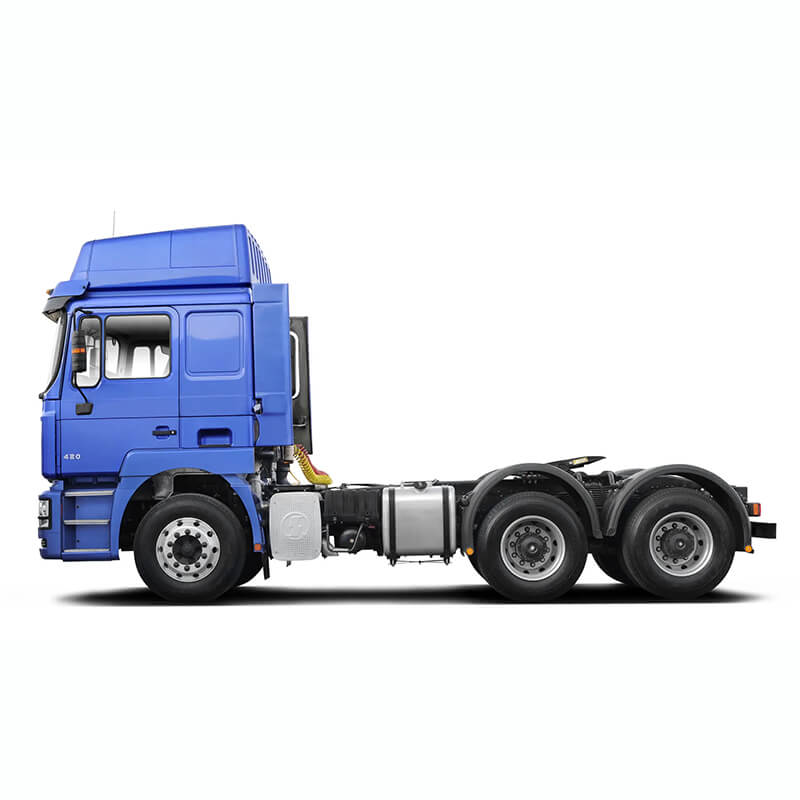
| SHACMAN F3000 | WP12.430E201 (430HP) | FAST 12JSD200T-B (12F+2R) | 6x4 | 49-70t | Heavy mining / harsh roads |
| SHACMAN X5000 | WP12.440E50 (440HP) | FAST 12JSD220T | 6x4 | 40-49t | Express / cross-border long-haul |
| HOWO NX400 | WP12.400E201 (400HP) | FAST 12JSD200T-B | 6x4 | 40-49t | General logistics, mixed roads |
| SITRAK G5 | MC11/MC13 (460-540HP) | ZF 16-spd / HW25716 | 6x4 | 49t | Premium high-uptime long-haul |
2. The Liangshan Reconditioning Standard
Liangshan's reconditioning chain is modular and standardized - never a paint-and-polish job. It is deep engineering covering powertrain downgrades, chassis structural inspection and environmental adaptation.
2.1 Powertrain Second Engineering: Cylinder Pressure and Injector Calibration
Cylinder pressure testing: Injectors are removed and each cylinder measured. Compression end pressure should reach 2.8-3.2 MPa with no more than 10% variance between cylinders. Engines failing the check get new piston rings, valve seats or re-honed liners.
Fuel injection calibration: Injectors are bench-tested (e.g. EPS815) for pre-injection, full-load and idle delivery and return flow. For high-sulfur, dirty overseas diesel, needle-valve clearances are fine-tuned and ECU fuel maps rewritten for the destination fuel grade.
2.2 Emission Downgrades and Fuel Adaptation (EGR/SCR Deletion)
Many destination markets (sub-Saharan Africa, parts of Central Asia) operate Euro II/III standards with diesel sulfur content above 500-2000ppm. High-sulfur fuel crystallizes urea in SCR systems, clogs DPF filters and poisons catalyst bricks, triggering ECU torque/speed derating (up to 40% power loss).
- Physical deletion: SCR tank, urea pump and catalyst are removed and replaced with a high-flow straight-through exhaust silencer.
- ECU reflash and sensor masking: Factory-level programs rewrite the ECU to mask NOx sensors, exhaust temperature sensors and urea level sensors, removing derating logic and restoring full original power.
- Multi-stage fuel filtration: A heated large-flow diesel water separator with 10-micron primary and 3-micron secondary filters protects high-pressure pump plungers from water and abrasives.
2.3 Chassis Stress Inspection and Heavy-Duty Anti-Corrosion Coating
NDT and frame straightening: Magnetic particle (MT) or ultrasonic testing focuses on main beam U-bolt holes, suspension brackets and fifth wheel load areas for micro fatigue cracks. Three-dimensional frame straightening jigs correct longitudinal beam twist to within 2mm coaxiality.
Surface treatment: (1) Abrasive blasting to Sa 2.5 cleanliness, removing scale and rust; (2) zinc-rich epoxy primer at ≥60um dry film for cathodic protection; (3) polyurethane topcoat at ≥40um dry film against UV, heat and salt corrosion.
3. Regional Adaptation Guide
3.1 East/West Africa: Reinforced Suspension and Deep Ratios
With low paved-road ratios, corrugated surfaces and 50-100% overloading habits, trucks for Africa need: front springs upgraded from 9-leaf standard to 10-12 leaf thick plates (14-16mm); rear 12-leaf trapezoid springs with twin U-bolts; 8+8mm or 8+8+8mm double/triple-layer reinforced frame rails. Drive axles should be wheel-reduction axles (HC16/STR type) - secondary planetary reduction at the wheel end protects half shafts and differentials under extreme torque. Recommended rear axle ratios: 4.77 or 5.73.
3.2 Middle East: Cooling and Air Filtration Upgrades
With ambient temperatures over 50°C and frequent sandstorms: radiator cores are replaced with thicker wide-tube aluminum units (20-30% more area) with higher fan airflow; silicone fan clutches are set to open early or locked to constant-on; and an oil-bath pre-cleaner plus cyclone separator ahead of the paper main filter absorbs 90%+ of coarse sand, cutting inlet wear by up to 80%.
3.3 Southeast Asia: Moisture Protection and Ratio Optimization
For flat, humid, high-frequency short-haul work: use MAN-technology single-reduction axles (MCY13/MCY11) with 3.70 or 4.11 ratios - single-reduction axles save 5-8% fuel versus hub-reduction types and keep cruise speed at 80-90 km/h in the 1200 rpm economy band with 400-430HP engines. All chassis connectors get IP67/IP68 sealed covers; air brake systems get heated dual-tower air dryers with routine reservoir draining to prevent valve corrosion and seizure.
4. TCO Control and Procurement Pitfalls
4.1 Real Condition Verification (Beyond the Odometer)
Odometer tampering is common. Use factory diag tools (SINOTRUK EOL, Weichai Zhiduoxing) over OBD to read total engine hours, total fuel consumed and historical overheat/overspeed fault codes. Estimated true mileage: engine hours × 40 km/h average speed. Check fifth wheel lock-block wear - gaps over 3mm indicate chronic overloading. Inspect torque rod bushes and balance suspension liners for cracking and displacement.
4.2 Spare Parts Planning and Modular SKU Stocking
Order a first-phase consumable parts kit at a 10:1 ratio per vehicle to avoid downtime in the first 6-12 months: fuel pump plungers, injector nozzles, fan belts, oil/fuel/air filter sets; brake pads and drums, brake chamber diaphragms, dryer cartridges, air-line fittings; U-bolts, torque rod bushes, clutch discs and release bearings; starters, alternators, switch assemblies and LED lamps.
4.3 Procurement Pitfalls and Shipping Cost Optimization (Save up to 30%)
- Detect crash-repaired cabs: Check A/B pillar weld consistency and thick body filler; paint thickness over 500um at any panel indicates major collision repair.
- Ro-Ro shipping: Lowest damage risk, higher cost, limited routes.
- Bulk carrier: Cheaper, but salt corrosion risk - require transit protection wax coating on all vehicles.
- Containerized CKD/SKD: Cab, engine, axles and frame knocked down into a 40HQ container - 2-3 tractor heads per container, saving 30-40% freight and often qualifying for lower component import duties (10-20% below complete-vehicle tariffs).
Conclusion
Used heavy truck export is a technology transfer built on engineering experience, not a simple resale. With standardized remanufacturing and downgrade work at Liangshan, precisely matched to destination roads, fuel and climate, overseas buyers obtain assets with 80%+ of factory uptime at 30-50% of new-truck cost. Mastering powertrain matching logic, enforcing reconditioning inspection standards and planning spare parts strategy are the core rules for minimizing TCO and maximizing fleet profitability.